The short answer: probably yes
If you're doing anything beyond swapping a light switch or replacing an outlet cover, you almost certainly need an electrical permit in Oakland. The City of Oakland Building Department requires permits for any work that involves new wiring, new circuits, panel modifications, or changes to your electrical system's capacity.
This isn't just bureaucracy. Permits exist so that a city inspector verifies the work is safe and up to code. Unpermitted electrical work can create fire hazards, void your homeowner's insurance, and cause serious problems when you sell your home.
What requires a permit
Here's a clear list of common residential electrical work that requires a permit in Oakland (and most East Bay cities including Berkeley, Alameda, San Leandro, and Walnut Creek):
Permit required
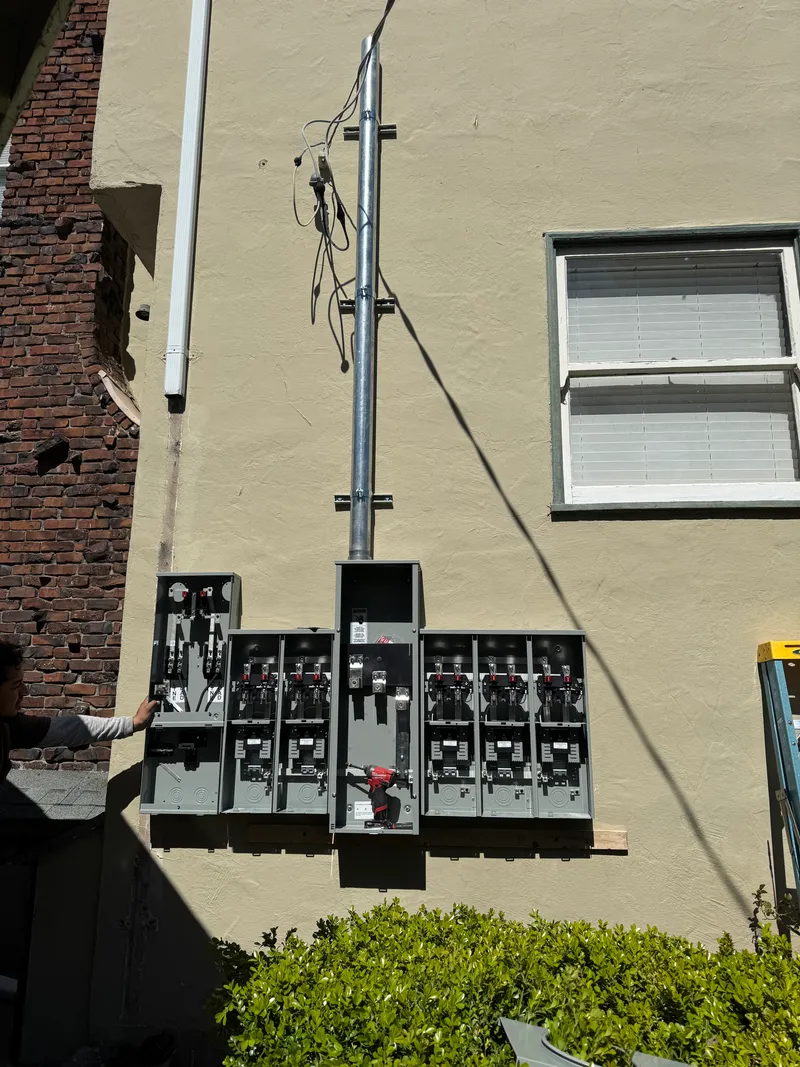
- Panel upgrades 100A to 200A, breaker replacements, new panels, meter base relocations.
- EV charger installation Any new 240V circuit for vehicle charging — always a permit.
- Recessed lighting New can lights require new circuits and ceiling cuts. Permit required.
- New circuits Adding any new circuit to your panel.
- Rewiring Partial or whole-house rewiring. Knob-and-tube replacement.
- Subpanel installation Adding a secondary panel (garage, ADU, workshop).
- Dedicated appliance circuits New circuits for AC, ranges, dryers, hot tubs.
- Outdoor wiring Landscape lighting circuits, patio outlets, pool and spa wiring.
- Smoke/CO detector hardwiring When adding new hardwired detectors to meet code.
- ADU electrical Any electrical work for accessory dwelling units.
What doesn't require a permit
Some minor work is exempt from permits. These are maintenance-level tasks that don't change your electrical system.
Permit NOT required
- Replacing a light switch Same-for-same swap, no new wiring.
- Replacing an outlet Same location, same type. Upgrading to GFCI in some cases may trigger a permit depending on scope.
- Replacing a light fixture Swapping one fixture for another on the same box.
- Replacing a breaker Same amperage, same panel slot.
- LED bulb or retrofit upgrades No wiring changes.
The key distinction: replacing existing components generally doesn't need a permit. Adding new wiring or circuits always does.
How the permit process works
If you hire a licensed electrician (which Oakland requires for permitted work), the process is straightforward — and we handle all of it.
Permit process, start to sign-off
- 01 Application Same day to a few days
We submit to the Building Department. Over-the-counter permits for standard residential work move through a shorter queue than plan-review work.
- 02 Work Job-dependent
Once the permit is issued, we do the electrical work. Permit is posted at the job site during construction.
- 03 Inspection request Scheduled with the city
We schedule a city inspection after work is complete. Inspector verifies compliance with the California Electrical Code.
- 04 Final sign-off Same visit or after corrections
Inspector signs off, permit closes, work is on record. Most residential inspections pass first visit.
How long do permits take, city by city?
Here's what we see month over month on real jobs across the East Bay. City turnaround varies significantly — it's worth knowing before you plan a project.
East Bay permit offices
- Oakland Planning & Building at 250 Frank Ogawa Plaza. We file it and track it to issuance.
- Alameda Building & Safety Division. We file it and track it.
- Berkeley Building & Safety Division reviews thoroughly. We build the review time into the plan.
- Richmond / San Pablo / El Cerrito / Pinole Separate West Contra Costa building departments. We file and track each one.
- San Leandro / Walnut Creek Standard process. Straightforward for residential permits.
What happens if you skip the permit?
We get it — permits cost money and add a step. But skipping them creates real risk:
- Insurance denial If an electrical fire traces back to unpermitted work, your homeowner's insurance can deny the claim. This alone should be reason enough.
- Sale complications Home inspectors and title companies flag unpermitted work. Buyers may demand you rip it out and redo it — or walk away.
- Safety The whole point of an inspection is a second set of trained eyes confirming the work is safe. Without it, mistakes can hide in your walls for years.
- Fines Cities can issue fines for unpermitted work if discovered. Getting caught usually means a retroactive permit at double the original fee, plus opening finished walls for inspection.
Do I need to hire a licensed electrician?
In California, homeowners can legally pull their own electrical permits for work on their primary residence. But there's a catch: you have to do the work yourself (not hire an unlicensed handyman), the work still has to pass inspection, and you take on all the liability.
For anything beyond a simple outlet addition, we strongly recommend hiring a licensed electrician. Panel work, EV charger circuits, and recessed lighting involve working inside your electrical panel where live bus bars carry 200 amps at 240 volts. It's genuinely dangerous work, and it needs to be done right.
When you hire us, the permit is included in our price. You don't pay extra for it, and you don't deal with the city at all — we handle the application, scheduling, and inspection.
Let us handle the permit
Free walkthrough, transparent pricing, and we handle the city application, scheduling, and inspection as part of every job — no separate line item, no surprises.
Related reading
- Residential Electrical Services in Oakland: The 2026 Homeowner Guide — full pricing, timelines, and city-by-city notes for every service.
- EV Charger Installation at Home — EV charger installs always need a permit. Here's the full breakdown.
- Recessed Lighting Layout: How Many Cans Per Room? — planning recessed lights? Here's how to figure out spacing and count.