Panel Upgrades

Modern panels for safer homes

Upgrade from 100A to 200A. Federal Pacific + Zinsco replacement, PG&E coordination, code compliance.

$5k – $12k Tier range
1 – 2 days Install
Weeks – months PG&E scheduling
NEC 2023 Code cycle
Why your panel matters

200 amps is the modern baseline.

Most East Bay homes built before the 1990s have 100-amp panels — many with the original breakers. That was enough for the appliances of that era. It's nowhere close to what a modern household demands. AC, induction ranges, home offices, EV chargers — a 100A panel is a bottleneck.

A 200A upgrade gives you the headroom to run everything — now and for the next 30 years. We handle the full scope: new panel, breakers, meter base, PG&E coordination, city permit, and final inspection. You don't talk to the city or PG&E once.

Federal Pacific + Zinsco panels are urgent replacements, not patches. Documented breaker failure rates, insurance red flags, and fire risk. We won't add circuits to a known fire-risk panel — we replace it.

What we see

Four things we check on every walkthrough.

Every panel upgrade walkthrough starts with the same four questions. The answers place your job in a tier and set the timeline.

  1. 01
    Federal Pacific Stab-Lok + Zinsco Documented breaker failure rates. Insurance flags them. We won't add circuits — only replace.
    Urgent replace
  2. 02
    60A or 100A original service Can't carry AC + home office + induction + EV. Breakers trip, lights flicker. 200A is the modern baseline.
    Pre-1980 homes
  3. 03
    PG&E drop 30+ ft from panel Triggers engineering review and a cable-extend charge. Often avoidable by reusing the existing weatherhead.
    ~20% of jobs
  4. 04
    Mystery breakers + unlabeled circuits Legacy work from multiple electricians. We re-identify, label, and test every circuit on install.
    Every old panel

Real pricing, by distance from the PG&E drop

Panel upgrade pricing is almost entirely driven by the distance from PG&E's service drop to where the new panel lands. Same location + reuse of existing weatherhead = low end. Longer runs, new conduit, or a relocated service = higher end.

Pricing we see

100A → 200A panel upgrade

Pricing tiers by distance from the PG&E service drop.

  • Within 10 ft of the PG&E drop
    $5,000–$6,000
  • 10–30 ft, or multiple pipe runs
    $7,000–$8,000
  • Beyond 30 ft (with PG&E approval)
    $10,000–$12,000

Your final number depends on the distance, existing panel condition, and whether a concrete slab needs to be poured under the relocated service. We quote after a free walkthrough.

What's included

  1. 01
    100A → 200A panel swap New main panel with modern breakers, clean bus bar, every circuit labeled.
  2. 02
    PG&E meter coordination Disconnect + reconnect scheduled, paperwork handled, power-out minimized.
  3. 03
    City permit + final inspection Permit pulled in your name, posted on site, closed after inspector signs off.
  4. 04
    Federal Pacific / Zinsco replacement Known-fire-risk panels swapped for code-compliant Siemens or Square D hardware.
  5. 05
    Breaker replacement + labeling Every circuit identified, labeled, and tested. No mystery breakers left behind.
  6. 06
    Surge protection (optional) Whole-home surge protector installed at the panel — small add, big downstream protection.

Standard hardware

Panel Siemens or Square D Code-compliant residential 200A. Siemens PN-series or Square D QO/Homeline.
Breakers AFCI + GFCI per code NEC 2023 requires AFCI protection on most residential circuits, GFCI on wet-area + exterior.
Meter base PG&E-spec, listed New 200A meter base installed + sealed by PG&E on reconnect.
Optional Whole-home surge protector Type 2 surge device at the panel bus. ~$300 add. Worth it in a lightning-prone area.

Install timeline: work vs calendar

The install itself is 1–2 days of actual work. The calendar timeline is weeks to months because of PG&E and city scheduling — not because of the work.

  1. 01
    Walkthrough + bid Same week

    Panel inspection, load requirements, PG&E drop distance measured, relocation decision.

  2. 02
    City permit 1 – 4 weeks

    Oakland: typically 1 week. Berkeley: 2–3 weeks. We submit same-day to start the clock.

  3. 03
    PG&E scheduling Weeks – months

    Meter disconnect + reconnect window. The long pole on every panel upgrade — not the work itself.

  4. 04
    Install day(s) 1 – 2 days

    Panel, breakers, meter base, grounding, labeling. 4–6 hour power-out scheduled around you.

  5. 05
    City inspection Same week as install

    Inspector signs off, PG&E reconnects, permit closes. Work officially on record.

Recent panel job

Case study
Berkeley

100A → 200A panel upgrade, ~30 ft service run

$10,000

The new panel location was ~30 ft from the PG&E drop. Normally that triggers PG&E engineering review plus a charge to extend cables — months and thousands added. We proposed running the 30 ft feed through the existing weatherhead instead. PG&E's side didn't change, city and PG&E both approved. Saved the homeowner the engineering fee and the delay.
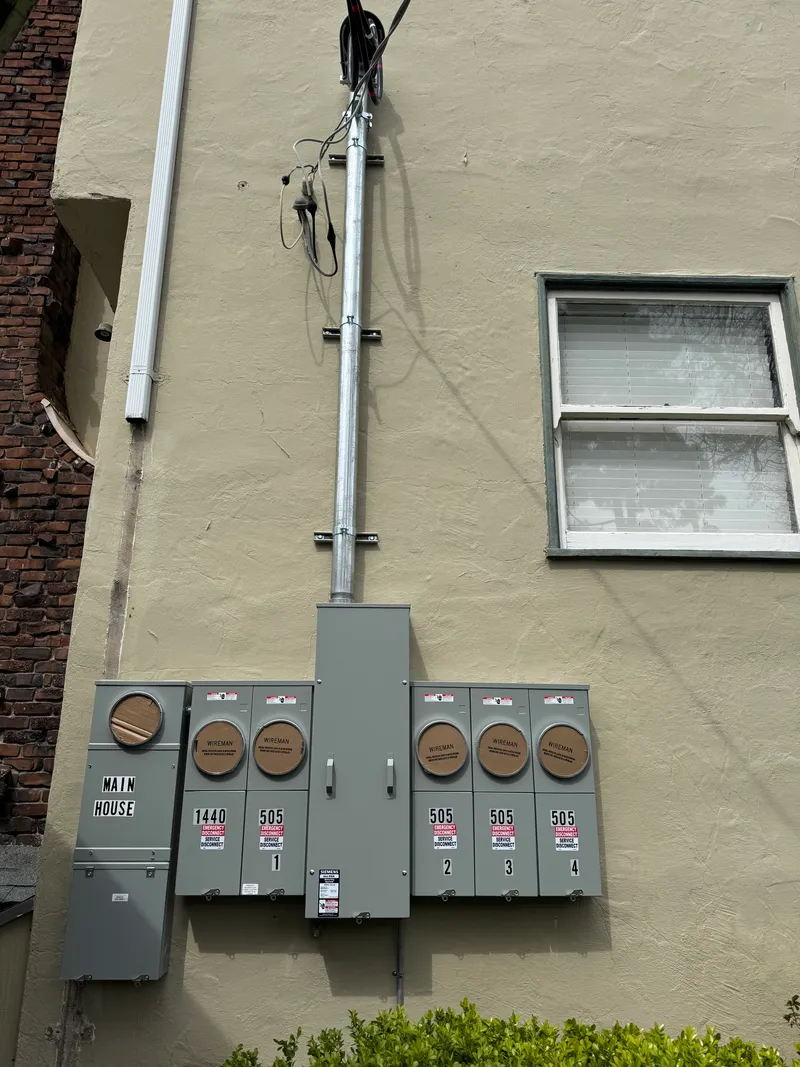
Completed 4-unit meter stack with covers installed Completed
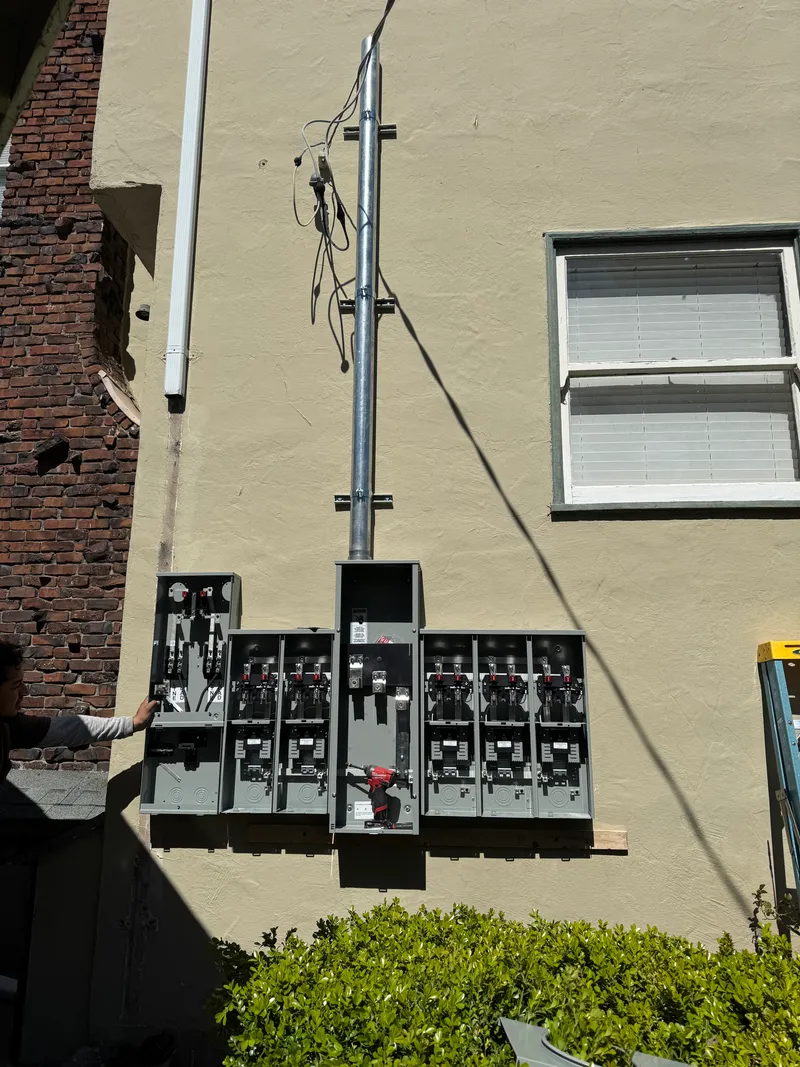
Meter panels open showing internal wiring during installation In Progress
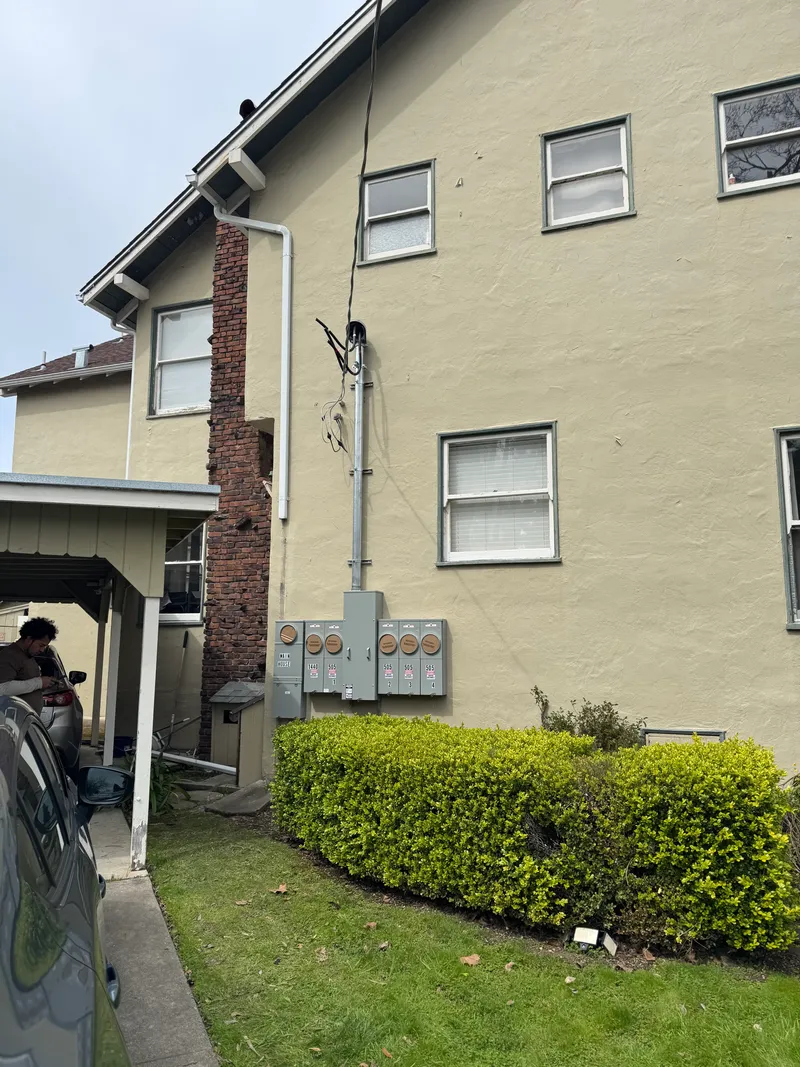
Full building view showing meter stack and conduit run to weatherhead Full Scope

Multi-unit meter stack upgrade — Oakland, CA

Next step

Ready for a panel upgrade?

We'll inspect your current panel, measure the PG&E drop distance, and give you a tier-exact quote — permit, PG&E coordination, and everything included. No surprises.

Why us for panel work

Four specifics that actually matter.

  1. 01

    Tier-exact pricing by PG&E drop distance

    Our three tiers ($5k / $7k / $10k) reflect the one variable that actually moves the number. No sight-unseen quotes, no hidden surprises.

  2. 02

    PG&E + city coordination on our end

    We pull the permit, schedule PG&E disconnect/reconnect, handle the inspection paperwork, and close the job on record. You don't talk to the city or PG&E once.

  3. 03

    Federal Pacific / Zinsco replacements done right

    Siemens or Square D as standard replacement. Every circuit re-identified and labeled. Not a patch job — a full modernization.

  4. 04

    Minimum power-down window

    4–6 hour disconnect is required by PG&E, but we time it around your fridge, heat, and at least one live outlet wherever possible.

FAQ

Common questions

A/

If your panel is 100A or less, has Federal Pacific or Zinsco breakers, frequently trips, or you’re adding an EV charger or AC unit — it’s time to upgrade.

A/

The install itself is 1–2 days. The calendar timeline is weeks to months because of PG&E scheduling and city permit turnaround — not because of the work.

A/

Yes, power is off for 4–6 hours during the swap. We coordinate timing with you to keep heat, fridge, and at least one working outlet live as long as possible.

A/

Federal Pacific Stab-Lok breakers have a documented failure rate — they don’t trip when they should, creating fire risk. We strongly recommend immediate replacement.

A/

If your panel is 100A, likely yes. A Level 2 EV charger needs a dedicated 40A or 50A circuit. We often bundle the panel upgrade with the charger install for a better price.

Next step

Let's get your electrical switched on.

Panel, EV, rewire, or lights — send us a few sentences. Most calls returned the same business day.

CSLB #1062166 Licensed C-10
Oakland, CA Minutes from you
Same-day Response window
Free Walkthrough
Call (510) 221-8384